Supporting her mum, trying to understand her diagnosis, and stepping wholeheartedly into a carers role was a difficult and at times confronting experience.
Bec has written a heartfelt and honest reflection of the years she and her family spent living and caring with PSP.
She hopes that by sharing her story, other family members caring for loved ones with Atypical Parkinson’s can know there are good times among the bad. As her family came together over the years supporting her mum, they developed a renewed connection with one another that they will all carry through the rest of their lives.
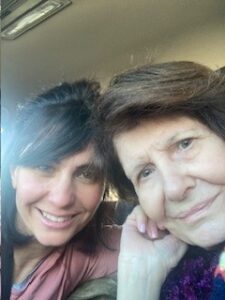
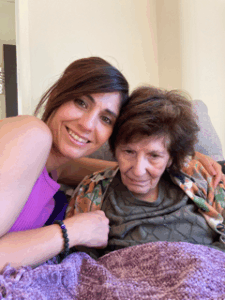
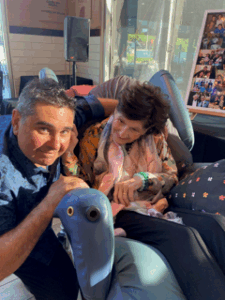
Reflections and thoughts on caring for a loved one who lived with Progressive Supranuclear Palsy
In 2015, when our mother was diagnosed with Progressive Supranuclear Palsy we began to notice a gradual decline in her abilities. It manifested in various ways, from minor car accidents to unexpected falls, which made everyday activities increasingly challenging for her. This pivotal moment marked the start of our journey together, preparing for the changes overtime and a sense of a new reality.
As a family, we sought out strategies to navigate these circumstances, aiming to provide our mother with a sense of independence while ensuring she felt well supported. Together we embarked on a heartfelt quest to enhance her quality of life, reinforcing the importance of family unity and adaptability in the face of adversity.
Being a caregiver often presents the harsh reality of navigating countless challenges when striving to provide support, especially as the diagnosis of a neurological condition does not only impact the individual. It requires the coming together of those around a loved one to get through. We are faced with navigating support networks and aged care services. We inevitably will supply and need our own social, physical, and emotional support.
In 2020, as the pandemic began to unfold, many of us faced the daunting challenge of ensuring our loved one received the care and support they needed. This confronted a most challenging and surreal time as aged care facilities across the country shut doors, unknowing what was yet to come. Communication and support changed for more than two months and seeing our loved one through a gate, glass window, or through an organised video call was what was endured.
I started a journey of journaling my thoughts, using writing as a means of coping and reflecting on the necessary connections to uphold our mother’s wellbeing. Our family embarked on a proactive approach, engaging with care support services and community networks, particularly as our circumstances evolved while she remained at home and then transitioned into aged care.
With changes to her mobility, eye movement, and vision, working with a dedicated neurologist in Adelaide helped us be prepared for the progressive changes that were ahead and would see mum change significantly. As she lost her speech, we found ways to continue to communicate and mum never backed down. Whether it be a thumbs up, a nod of yes or no, or a point of a finger, we knew she was doing her best all the way.
Through our experiences, my family and I witnessed our mother facing the trials of this rare neurological condition. In our most trying moments, we discovered new ways to support one another, nurturing comfort, care, and perspective to embrace life fully. We were continually inspired by her dignity, love, and selfless spirit. Her remarkable courage and strength guided us as we continued to cross this bridge each and every day together on this path.
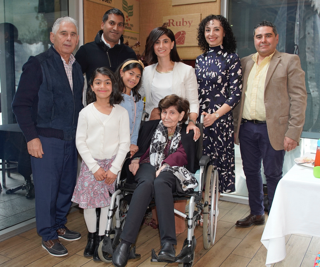
Progressive Supranuclear Palsy had become an integral part of our lives, shaping our daily experiences as we learnt to navigate its complexities. Each moment required us to connect, network, and adapt to the shifting landscape brought on by the condition.
The power of emotional bonds and the significance of our mental and physical wellbeing had never been clearer, driving home the fact that much of what we faced was beyond our control. Every day presented a new opportunity to confront this disease, and we’d learnt to approach each challenge with an open heart and mind. With our support networks as a family unit we had to manage and approach much of the unexpectedness of the PSP challenges with an open heart and mind as well as confronting the emotional, physical and mental toll on the experiences for the family.
It was in the small moments we shared that we found gratitude; through our connections, we drew strength from one another rand a sense of knowing that mum lived throughout supported by her loved ones.
We were always wondering and thinking how is mum feeling? How do we explain this to her granddaughters? This is where through the small moments we shared together of celebrations, engagement in the early years where mum had a sense of independence, we found gratitude and developed our connections in many memories that will be with us all forever. We had developed a profound sense of knowing that mum lived throughout supported by her loved ones and support networks.