
With more than 200,000 Australians affected by Parkinson’s, Australia has never had a national framework to guide how care, support, research, and policy responses should be coordinated.
Recognising this gap, leaders from across the Parkinson’s community began working together to call for national action.
NPAP Story: 2023 – National taskforce established
In August 2023, a national taskforce was established bringing together clinicians, researchers, advocates, and organisations representing people living with Parkinson’s. The taskforce worked to raise awareness of the challenges faced by the Parkinson’s community and the need for a coordinated national response.
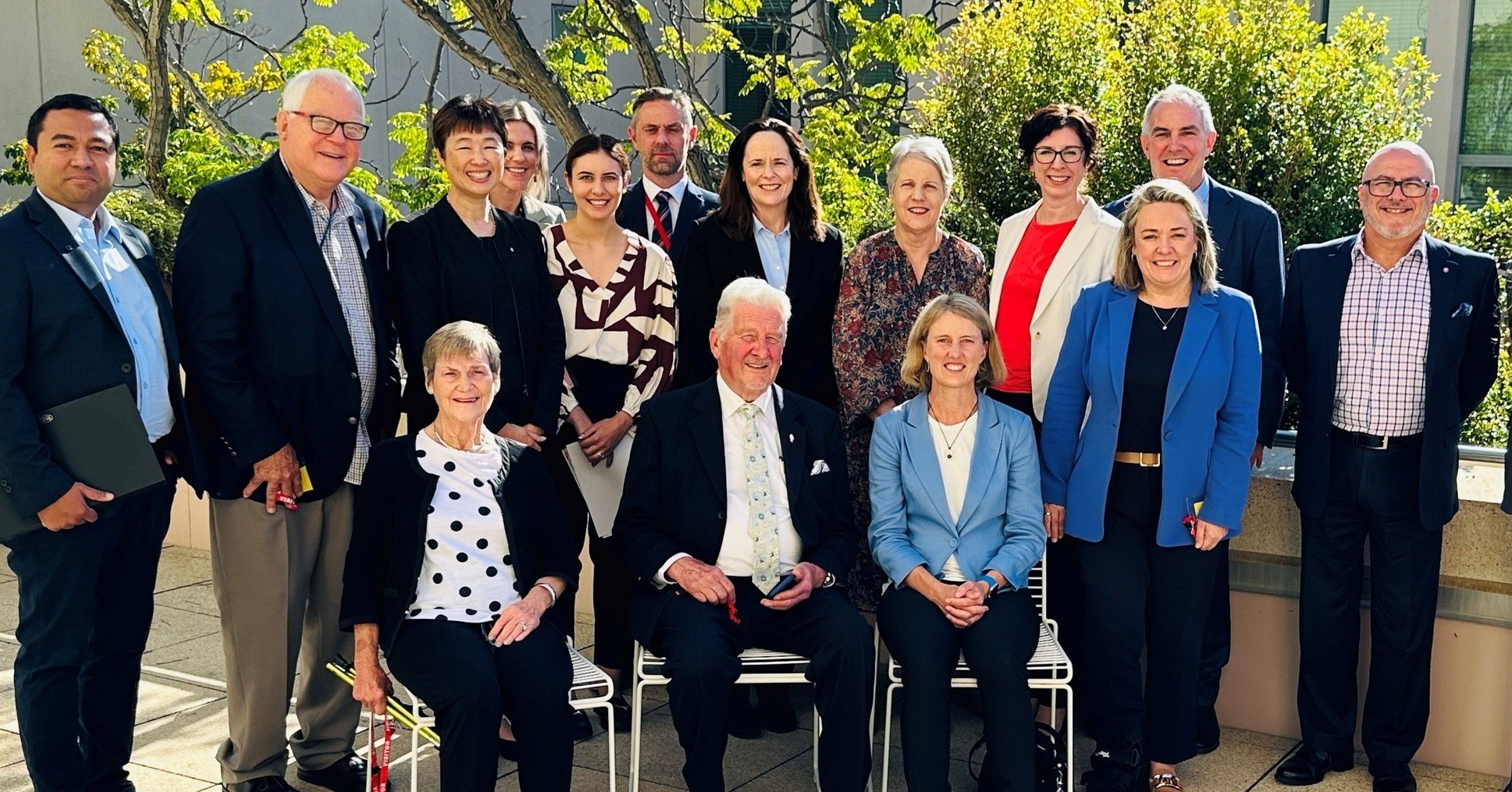
2024 – Government commitment and formation of the National Parkinson’s Alliance
In March 2024, Fight Parkinson’s, together with representatives from across Australia, travelled to Canberra to hold a national summit to raise awareness of the growing impact of Parkinson’s and call for urgent national action.
Following this advocacy, the Australian Government committed $800,000 in the 2024–25 Federal Budget to support the development of Australia’s first National Parkinson’s Action Plan (NPAP).
To deliver this work, Fight Parkinson’s supported the formation of the National Parkinson’s Alliance (NPA), bringing together organisations from across the Parkinson’s community and sector to work collaboratively with government, clinicians, researchers, and people living with Parkinson’s to undertake national advocacy and develop the plan.
2025 – Community consultation begins
Between June and October 2025, a national consultation process was undertaken. Supported by a national reference group representing all Australian jurisdictions, the consultation included surveys and workshops involving people living with Parkinson’s, carers, healthcare professionals, and researchers.
More than 5,700 people participated nationally, including from across metropolitan and regional communities. Workshops were held across the country to ensure equitable opportunities for people to contribute.
The consultation provided a strong evidence base, combining lived experience, clinical expertise, and research insights. The priorities and actions identified through this process have shaped the NPAP.
In Victoria, 1,354 community members contributed to the survey, with seven face-to-face workshops and two online sessions delivered, ensuring participation from both metropolitan and regional communities, including dedicated engagement with people living with PSP, MSA, or CBS.
Image:
What the community told us
Through surveys and workshops, people living with Parkinson’s, carers, clinicians, and researchers shared their experiences and priorities.
The consultation revealed that Parkinson’s affects many aspects of life—including physical health, emotional wellbeing, social connection, access to care, and financial stability.
People living with Parkinson’s described a condition that affects how they move, how they work, how they connect with others, and how they plan for the future.
Key findings
-
Access to specialist care varies widely
Many people reported difficulty accessing movement disorder neurologists, specialist Parkinson’s nurses, and multidisciplinary care teams, particularly in regional and rural areas.
Participants described long wait times, limited availability of specialists, and the challenges of travelling long distances to access appropriate care.
These gaps can result in delays in treatment, fragmented care, and increased stress for individuals and families.
-
Diagnosis and treatment pathways are inconsistent
People often experience delays in diagnosis and limited access to coordinated care following diagnosis.
Many also reported receiving limited information, guidance, and support at the time of diagnosis, leaving individuals and families uncertain about what to expect and where to seek help.
Early diagnosis and early access to treatment, therapies, and support services can help people manage symptoms more effectively and delay disability.
-
Better support is needed for daily living and quality of life
Participants highlighted significant inequities in access to services and support.
This includes:-
- shortages of healthcare professionals trained in Parkinson’s care
- limited access to physiotherapy, speech therapy, and occupational therapy
- difficulties accessing rehabilitation and exercise programs
- gaps in mental health support
- limited assistance for carers
Exercise and rehabilitation were consistently identified as critical for maintaining mobility, independence, and quality of life.
-
-
Research needs greater coordination and investment
Australia has world-class Parkinson’s researchers and research institutions.
However, stronger national coordination and sustained investment are needed to accelerate discoveries and translate research into better treatments, improved models of care, and enhanced support for people living with Parkinson’s.
Greater collaboration between researchers, clinicians, and the Parkinson’s community was highlighted as a key opportunity.
-
People want their voices included in decisions
The consultation strongly reinforced the importance of lived experience informing policy, research priorities, and healthcare services.
People living with Parkinson’s and their carers want to be actively involved in shaping the future of Parkinson’s care in Australia.
Embedding lived experience in decision-making ensures that services and research priorities reflect the real needs of the community.
-
Living with Parkinson’s: Physical and emotional challenges
Many participants described the daily impact of symptoms including fatigue, stiffness, tremor, mobility difficulties, and balance challenges.
Fear of falling was frequently mentioned as a major concern, often limiting independence and confidence.
Participants also described emotional challenges including anxiety about disease progression, concerns about cognitive decline, and uncertainty about the future.
-
Stigma and social isolation
Limited awareness and understanding of Parkinson’s remain a major issue.
Many participants reported experiencing misunderstanding or stigma associated with their symptoms.
Reduced mobility, workplace changes, and lack of community awareness contribute to social isolation.
-
The experience of carers
Carers reported emotional, physical, and financial strain, with strong demand for respite, counselling, and clearer long-term care pathways.
Aims of the National Parkinson’s Action Plan
The NPAP identifies priority areas including but not limited to:
- Reduce stigma, improve awareness and ensure access to accurate information
- Strengthen prevention strategies to delay onset and improve understanding of risk and disease progression
- Improve accurate and timely diagnosis and post diagnostic care
- Improve clinical care, treatment pathways and coordination of care
- Build capacity and capability of the healthcare workforce
- Improve data and maximise the impact of research
What happens next
The launch is an important step—but it is only the beginning.
The NPAP is foundational, providing a focus for action, investment, and system reform. Its impact will depend on continued collaboration and commitment across governments, health services, researchers, and community organisations.
Fight Parkinson’s will continue to advocate for the implementation of the plan and ensure the voices of people living with Parkinson’s remain at the centre of this work.
Our commitment
The findings of this plan strongly reflect what we hear every day from the Fight Parkinson’s community and reaffirm Fight Parkinson’s ongoing commitment to:
- education, information, and support
- building workforce capability in Parkinson’s care
- advocacy for improved services and funding
- supporting research and innovation
We will continue to work alongside the community and our partners to ensure this plan leads to meaningful change over time.
Today, the NPAP stands as a shared commitment—shaped by the community and focused on improving the future for everyone affected by Parkinson’s.