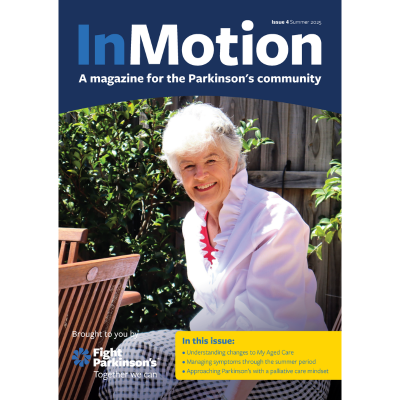
- Acknowledging the growing number of Australians who are diagnosed with Parkinson’s (including Young-Onset), and Atypical Parkinson’s (including PSP, MSA, and CBS)
- Educating Australians and the wider Parkinson’s community on the signs, symptoms, and services or supports that are available to people living Parkinson’s, their carers, family, friends, and health care professionals
- Fostering connection and understanding through sharing personal stories.
This April, we are answering some Frequently Asked Questions about Parkinson’s—focusing on the ‘What’, ‘Who’, ‘When’, ‘Where’, and ‘Why’.
In recognition of the launch of Parkinson’s Awareness Month, we’re kicking things off with the ‘What’ behind Parkinson’s.
The What
What is Parkinson’s?
Parkinson’s is the fastest growing a neurological condition globally. 20% of people are diagnosed with Parkinson’s when they are of working age. Young Onset Parkinson’s is typically diagnosed in young adults under the average age of 65.
What does progressive mean?
In medical terms, Parkinson’s is considered “progressive” because the symptoms typically progress as Parkinson’s advances. This progression occurs because dopamine-producing neurons in the brain gradually die, particularly in the substantia nigra, which affects movement control. The process is slow and often spans years or decades, and it generally does not reverse on its own, though the pace varies widely among individuals.
What are the signs and symptoms?
Parkinson’s is a progressive neurological condition characterised by motor (movement) and non-motor symptoms. The earliest symptoms may occur before any movement and can include, constipation, loss of smell, and acting out your dreams. Other symptoms can include:
- Resting tremor
- Slow movement and stiff muscles
- Anxiety and depression
For a comprehensive list of symptoms, please click here.
What are the treatments?
While there is currently not a cure for Parkinson’s, there are a range of treatments that can help to manage the day-to-day symptoms.
The most common treatment for Parkinson’s is medication. Parkinson’s medication primarily works by increasing the levels of dopamine in the brain and optimising the brain’s use of dopamine.
Every person with Parkinson’s has a different experience of the condition. Seeing a Neurologist or a Doctor who has a special interest in Parkinson’s and health care professionals, such as, Physiotherapists and Speech Pathologists will help to get the best management of symptoms and help identify the best treatment choices.
To learn more about Parkinson’s treatments, medication management, and support options, please click here.
Keep an eye out on our website and across our social media channels throughout April to learn more about Parkinson’s and read a heartfelt personal story from one of our valued community members.