Important note to the community
While Fight Parkinson’s maintains that exercise is one of the best ways to help manage Parkinson’s symptoms, it is important to note that everyone’s fitness levels and capabilities are different. Please speak to your GP or your Parkinson’s specialist before considering any long-form or physically demanding hike or climb.
Gaby’s Parkinson’s diagnosis
When Gaby noticed some stiffness in his right arm and his handwriting getting smaller, his GP suggested he book an appointment with a neurologist. A few months later and following some simple movement and balance tests with his neurologist, Gaby was officially diagnosed with Parkinson’s.
“It was a huge shock,” recounted Gaby.
“But I was fortunate to get good support from Fight Parkinson’s.”
Joining the Fight Parkinson’s community, which he learned about from a brochure in his neurologist’s office, has enabled Gaby and his family to receive the support they need, including:
- Feeling informed, and understood from attending multiple online seminars
- Learning from the free online education courses available on our Community Learning Hub and other resources across our website
- Help navigating the complexities of the NDIS system and application forms
- Assistance locating and accessing local allied healthcare professionals, like a speech pathologist, occupational therapist, counsellor, etc
- Connecting with community by participating in Fight Parkinson’s community events, e.g. A Walk in the Park.
For Jane, Gaby’s wife of 26 years, accessing the Fight Parkinson’s website for resources and advice, as well as attending online seminars “has been very helpful.”
Gaby and family continue climbing uphill
Contemplating the biggest challenges in managing his Parkinson’s, Gaby’s resilient nature shone through in his answer.
“Getting used to so many appointments, taking medication a few times a day, and setting up my supports with the NDIS was a lot to do. Even managing my diary took some getting used to. It was not easy the first year, but I feel more in a rhythm now.”
Since his diagnosis, Gaby now schedules an appointment with his neurologist every 6 months, and is managing his Parkinson’s well with medication, ongoing support from the NDIS and Fight Parkinson’s, as well as motivation from Jane.
Jane views herself more as a ‘support person’ for Gaby, rather than a carer, due to the fact Gaby is “good at managing his condition”. She motivates him “to keep on track with his occupational therapy, physio, general diet, and exercise.”
Conquering Kilimanjaro
Jane and Gaby are active hikers and quite physically active. Gaby enjoys running, cycling, and boxing, which he does with a Parkinson’s group in St Kilda. But the active hobby that brings him the most joy, is hiking.
Alongside the restorative effects of ‘forest bathing’ – the act of immersing oneself in nature using all of one’s senses – Gaby also enjoys how hiking encourages him to slow down and appreciate the world around him.
“Hiking is good for the soul, as well as the body. I feel calm and content hiking. Completing a hike gives a good sense of achievement, but I more enjoy the journey of the hike, such as taking in nature, having a thermos of tea, looking at the beautiful environment, etc.”
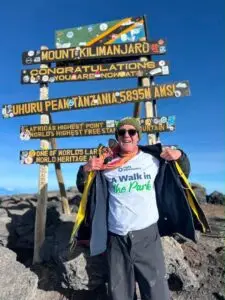
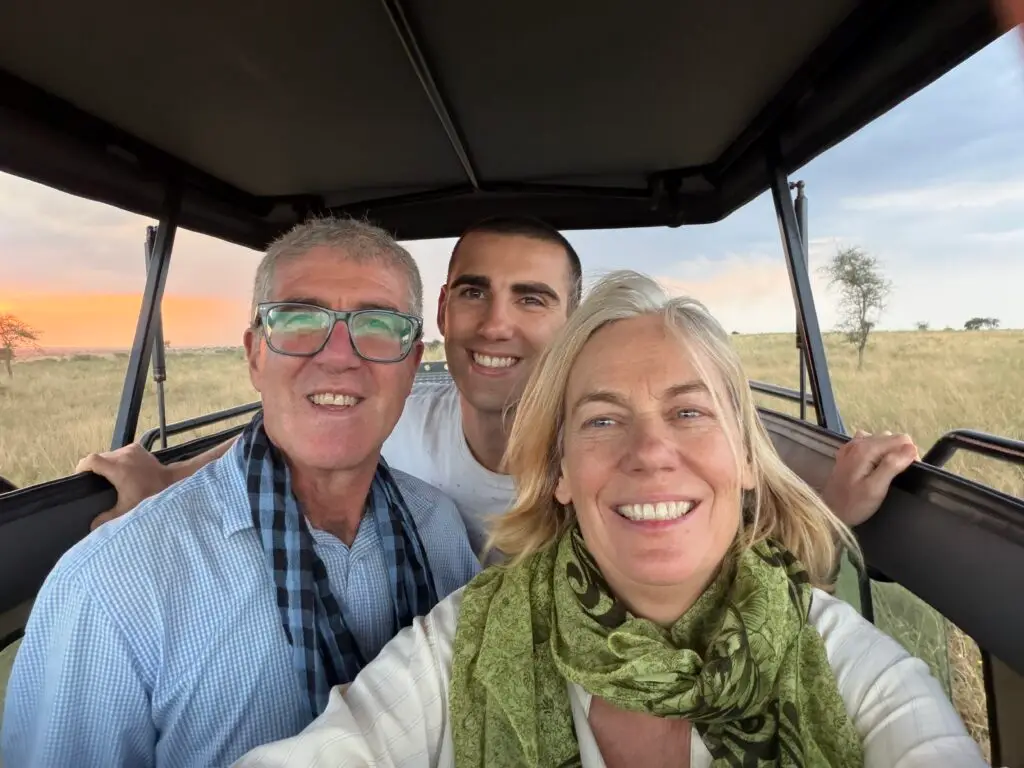
Upon the family’s decision to go on safari in Tanzania, Jane, Gaby, and their son, Marcel, also decided to start training for the hiking challenge of Africa’s highest mountain – Mount Kilimanjaro.
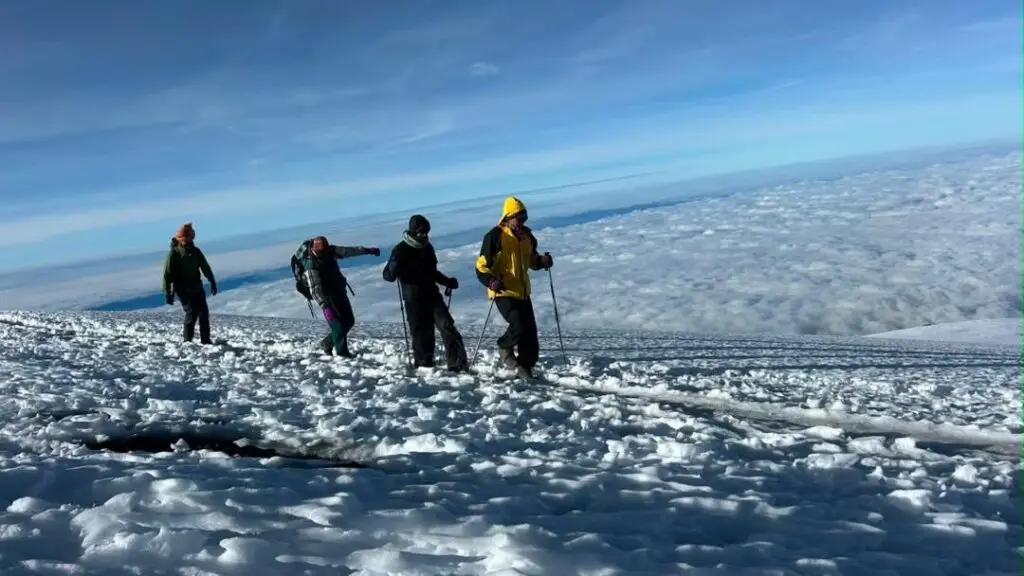
Together, with a team of 8 porters, 2 guides, and 1 chef, the family eventually set off on the 5-day route up the mountain. Through five climate zones – bushland, rainforest, heath, alpine desert, and an icy arctic landscape – the family were confronted with extreme temperature variations, high altitudes, and the many fatiguing challenges presented by ‘the roof of Africa’.
While Jane reached the base camp at 5,000 metres, Gaby and Marcel continued on the final 1,000 metres to the summit. Though exhausted, Jane commented that they were “proud they did it”.
“The guides were very supportive, and we trained a lot before going. We took it a day at a time,” reflected Gaby.
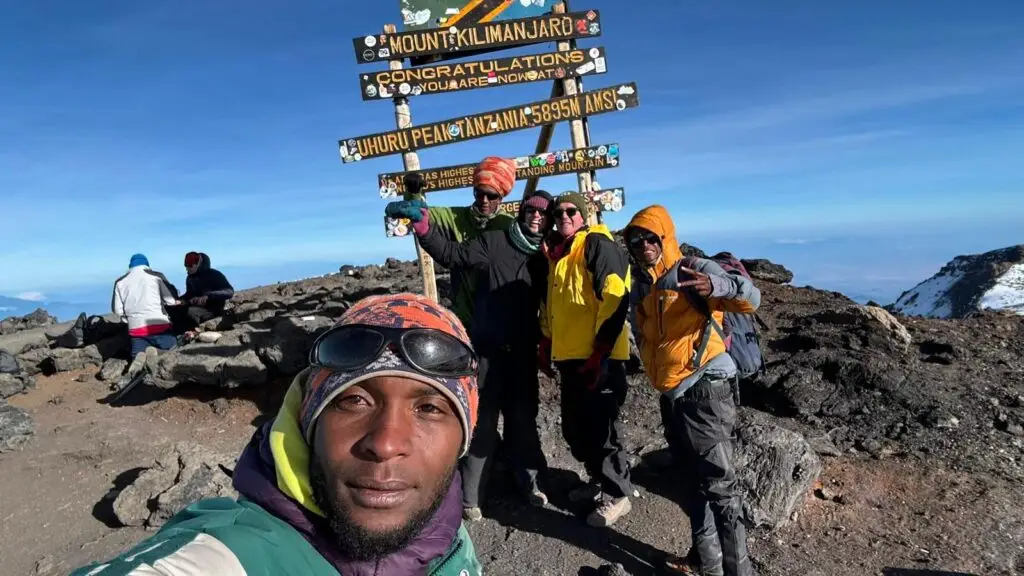
The next summit
The phrase “don’t look down” is often used by hikers and climbers to remind themselves, or others, to concentrate on the path ahead, rather than becoming distracted or intimidated by the height or drop below. This is the same lens through which Gaby chooses to view his Parkinson’s.
“I feel it is important to keep moving and find something (can be anything) you like to do. Mine is hiking but it could be anything. Even setting small goals can be useful.”
Gaby sees more hikes in his future, with Werribee Gorge on the horizon, where he plans to test his new hiking boots. And further down the track – the north of Argentina, where he was born.
Fight Parkinson’s would like to thank Jane and Gaby for sharing their story with our community.
If you would like to share your story, poem, artwork, creative piece with us, please email [email protected]