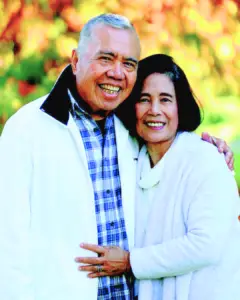
Caregiving is a life-changing experience.
After 39 years of working in the corporate world, I happily retired with a plan to check the boxes off our bucket list with Rey. The transition into retirement was going well, but Rey’s Parkinson’s diagnosis in early 2025 came unexpectedly and was mind-blowing.
The Parkinson’s diagnosis
Before his diagnosis, Rey was independent, pursuing his hobbies, and enjoying time with our children and precious grandchildren.
His diagnosis was a life-changing experience for our family. The emotional, physical, and mental demands of caregiving was a shock. There was a feeling of loss. One day we were both living independently, the next was a sudden transition into a role requiring constant attention, patience, and compassion without prior preparation.
In retrospect, Rey’s Parkinson’s symptoms started to manifest a few years ago. We noticed subtle changes in his walking, stiffness in his left arm, and changes in speech. We thought it was part of ageing.
After a series of doctors’ visits to address a vision issue, Rey’s specialists confirmed his Parkinson’s diagnosis, a condition I knew nothing about. It was shocking to hear Parkinson’s is a progressive illness and has no cure—two words that make me sad and fearful.
As we were recovering from the shock of the diagnosis, I started to ruminate on what the path forward was. The diagnosis was unsettling, and I did not know where we were headed. I experienced intense emotions thinking about what we can do to delay Rey’s progression.
I was stressed and overwhelmed by the unknown challenges ahead. I was fearful of the caregiving responsibilities, because I am getting older. I felt sad thinking of Rey losing independence, including the emotional toll on his quality of life. I developed anxiety that led to a sleep disorder and high blood pressure—my first time experiencing these symptoms.
Understanding and coping with the Parkinson’s diagnosis
Counselling helped us process and manage the emotional and mental impact of the diagnosis and learn coping strategies. It helped Rey rebuild his sense of identity, that he was the same person who happens to have Parkinson’s. For me, the sessions offered practical guidance on caregiving tasks and I learned the importance of self-care to reduce caregiver burnout.
Actively communicating with the team of specialists regarding medication management and how to manage the symptoms has been invaluable. Coordinating with allied health professionals in creating a preventive care plan is also extremely helpful.
Integrating peer support systems
To cope with this new reality, I am educating myself to better understand Parkinson’s. I visit websites and listen to podcasts.
Support groups are life savers. The Fight Parkinson’s Werribee Peer Support Group and ParKanDo have been that for us. They provide opportunities social connections and a safe place to share lived experiences, recognising that we are not alone in our journey. We get to learn from speakers about Parkinson’s, the importance of regular exercises and breakthroughs in research that give us hope that things will get better—not to mention the friendly conversations over tea!
Incorporating spiritual health and self-care
Our Christian faith of constant prayers and scripture readings has greatly helped us find peace, comfort, and hope as we navigate the storms and uncertainties of life.
In the area of self-care, I manage my physical health by getting enough sleep and regular exercise. I seek help from my children with some of the responsibilities so I can get regular breaks. I have started attending carer peer groups and participating in mindfulness activities.
Moving forward
While hoping that a cure will come sooner than later, Rey and I agreed that we will not allow Parkinson’s to defeat us and will do everything we can to delay the progression by:
- Actively prioritising exercise and adhering to lifestyle factors like adequate sleep and wellbeing
- Maintaining strong support systems – support groups and social connections
- Actively seeking professional help to manage symptoms
- Adapting to changes and moving on with life, like carrying on with the daily activities and resuming holidays again.
Everyone’s journey is different. Let us find joy in life as we are experiencing it, because we can’t go back again. I end with this quote from Jon Kabat-Zinn: “you can’t stop the waves, but you can learn to surf.”
Whether you are someone who lives with Parkinson’s (including Young-Onset) or Atypical Parkinson’s (including PSP, MSA, and CBS), a caregiver, a friend or family member of someone who lives with Parkinson’s, help is available at Fight Parkinson’s.
Phone
Health information line: Free call 1800 931 031*
*A free translation service is available on this line.
Email
[email protected]
Visit in-person
Suite 6, Waterman Business Suites, Level 1, 793 Burke Road, Camberwell 3124
Open Monday – Friday, 9am-5pm
Mail
PO Box 116 Camberwell VIC 3124