

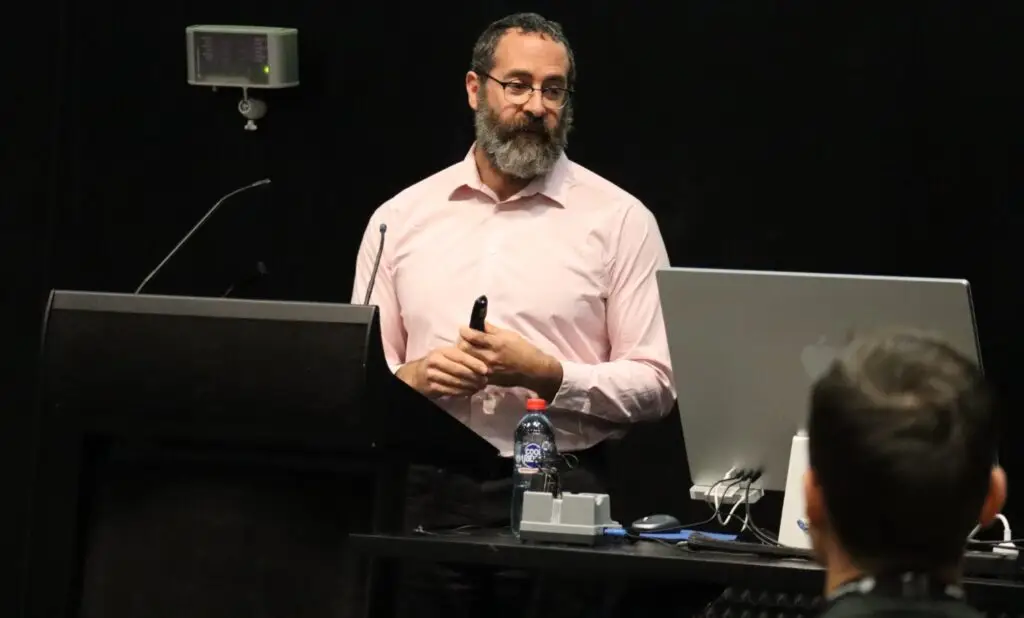
According to Benzi Kluger, MD, MS, FAAN (professor of neurology and medicine, and Director of the Palliative Care Research Centre and Neuro-palliative Care Division at the University of Rochester Medical Centre in New York), an integrated, palliative approach to healthcare is essential to improving the quality of life for people living with Parkinson’s, as well as their carers, families, friends, and healthcare professionals.
“Palliative care continues to be underutilised in Parkinson’s, but there’s lots of opportunities to improve people’s lives by integrating it earlier,” stated Professor Kluger at the 2025 Parkinson’s Research Symposium in Melbourne.
The World Health Organisation (WHO) defines palliative care as an approach that improves the quality of life of patients—adults and children—and their families who are facing problems associated with life-threatening illness. It prevents and relieves suffering through the early identification, impeccable assessment, and treatment of pain and other problems, whether physical, psychosocial, or spiritual.
To learn more about palliative care, please visit the Fight Parkinson’s Community Learning Hub to access the free online course: ‘Palliative care and Parkinson’s’, and more.
An important part of palliative care, is advance care planning, which is more than a do-not-resuscitate order.
- Advance care plans provide people the opportunity to think about and put on paper their own preferences in relation to their care.
- It promotes conversations with both family and healthcare professionals and creates a record that can be referred to in the future if a situation arises where a person is unable to express their preferences. (This can be especially helpful during such situations, if these conversations haven’t yet occurred, and both healthcare professionals and family members are unsure of what the person’s preference would have been).
- An advance care plan helps identify when a palliative approach to your care may be considered.
To learn more about advance care planning, please visit Advance Care Planning Australia.
‘Advancing the Care Agenda’ by Professor Kluger
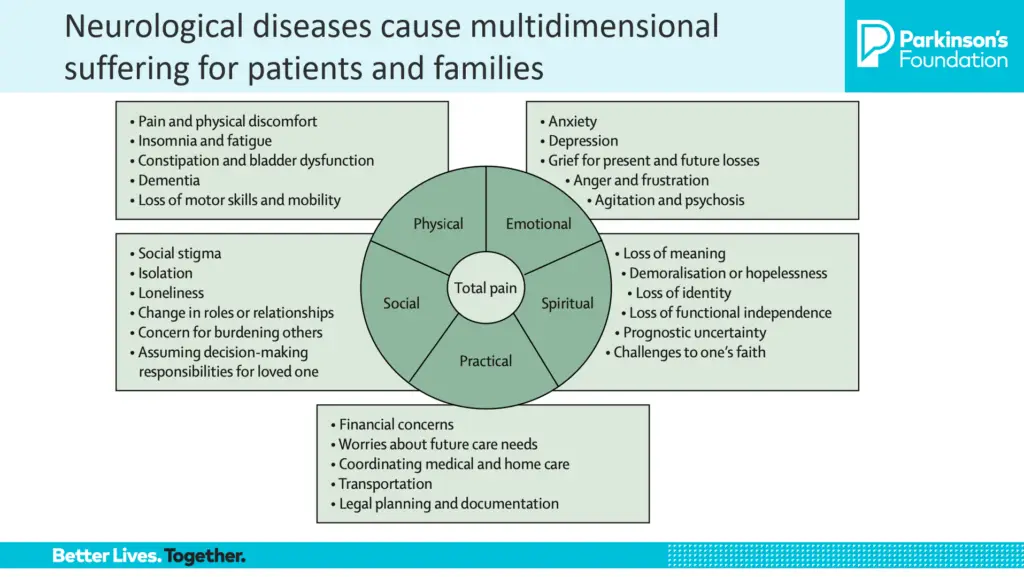
The concept of ‘total pain’
Referring to his research paper commissioned by Lancet Neurology, Professor Kluger spoke about the concept of ‘total pain’—another way of saying that people with Parkinson’s have multiple dimensions of suffering, instead of just the most commonly-associated physical symptoms, like a resting tremor or an unusual gait (a person’s manner of walking). These dimensions include:
- Emotional – anxiety, depression, grief, etc.
- Spiritual – loss of meaning or identity, demoralisation, hopelessness, etc.
- Practical – financial concerns, transportation, legal planning, etc.
- Social – social stigma, isolation, loneliness, etc.
- Physical – pain, discomfort, fatigue, etc.
“When I ask somebody with Parkinson’s: ‘What’s the toughest part of this for you?’, more often than not, the answer actually falls into the spiritual, social, or emotional realm,” said Professor Kluger.
Some of the most common concerns that Parkinson’s patients have expressed to him include:
- a loss of independence
- loss of ability to do things that bring me joy
- I’m not the grandfather that I thought I was going to be.
He also provided some real-life examples:
“One woman described her Parkinson’s as a “flamboyant illness”, meaning, her tremor and her dyskinesia called attention to herself in ways that she didn’t want it to.
“A lot of the men in the study spoke about the ‘threats’ to their identity—the vision of themselves as a person, as a breadwinner, and as a provider were really disrupted, and there was not only guilt, but feelings of inadequacy in being able to ask for help.”
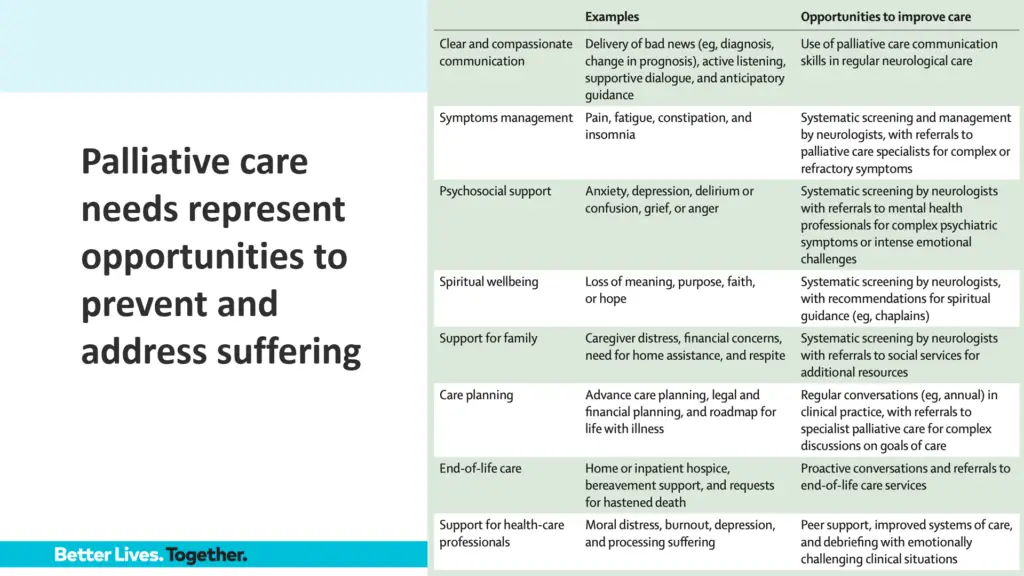
Palliative care needs opportunities for prevention
In order to prevent suffering from the multidimensions of ‘total pain’—not just for people living with Parkinson’s, but for their carers, families, and healthcare professionals too—Professor Kluger suggests that palliative care should be addressed from a preventative standpoint by focusing on opportunities to improve care in the following areas:
- Clear and compassionate communication at diagnosis or change in prognosis
- Symptom management
- Psychosocial support
- Spiritual wellbeing
- Support for family
- Care planning
- End-of-life care
- Support for health care professionals
See the image below for some examples.
So when should palliative care be implemented and by whom? Professor Kluger says that part of the problem is getting the healthcare sector to move away from these questions all together—because every person with Parkinson’s deserves palliative care at every stage of their health journey, and now is the right time to do it.
Thinking about palliative care from a healthcare perspective
According to Professor Kluger, “End-of-life and complex palliative needs, is just the tip of the iceberg.”
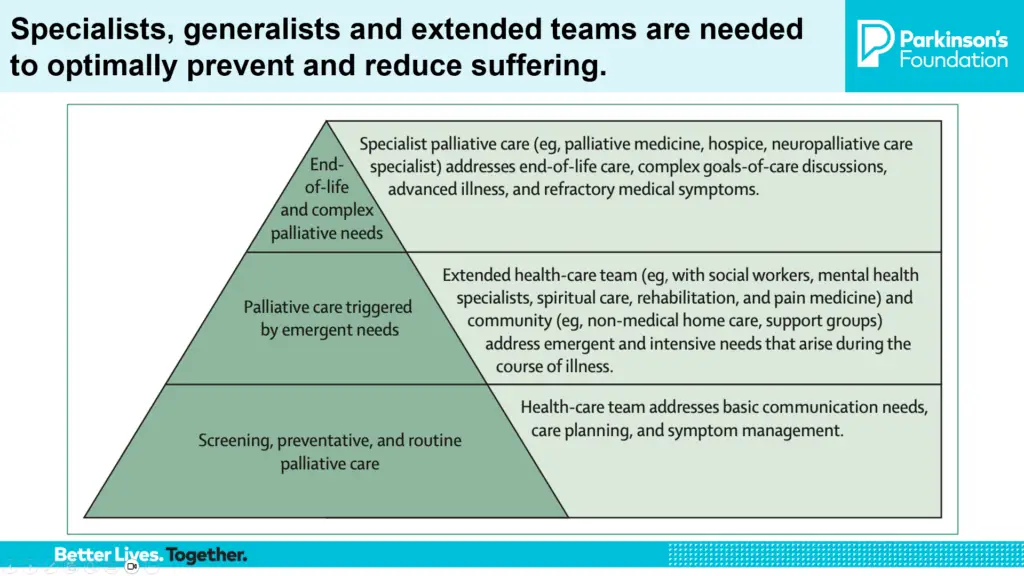
“The foundation is preventative primary palliative care,” he said.
This means that everyone, not just palliative care specialists, should be implementing preventative palliative care to help reduce the patient’s suffering from total pain—including health care professionals like mental health councillors, movement disorder specialists, nurses, pain specialists, social workers, etc.
The proof is in the paper
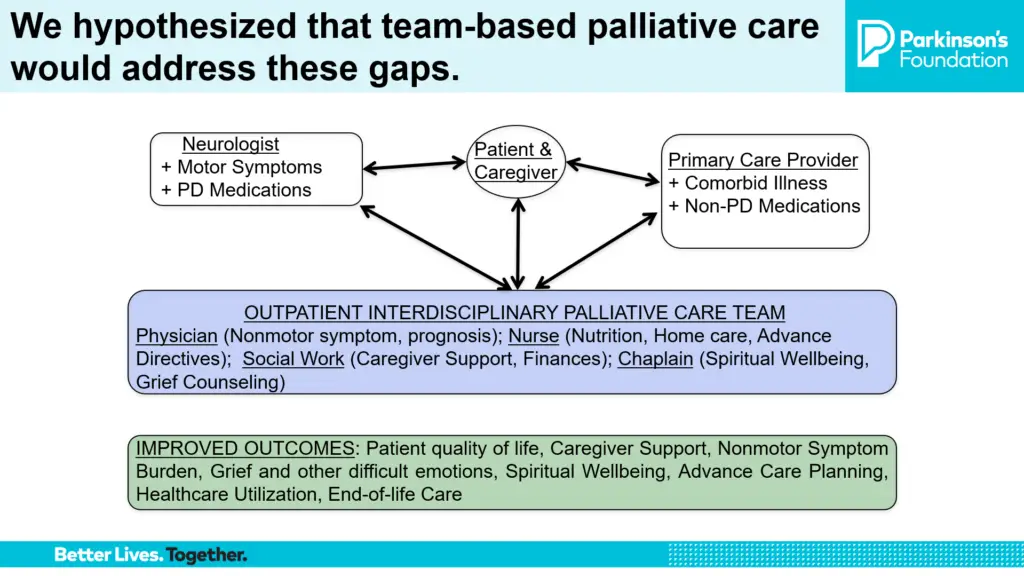
In a research paper produced in 2020, and lead by Professor Kluger, a clinical trial was conducted in order to determine if outpatient palliative care is associated with improvements in patient-cantered outcomes compared with standard care among patients with Parkinson’s disease and related disorders, and their caregivers.
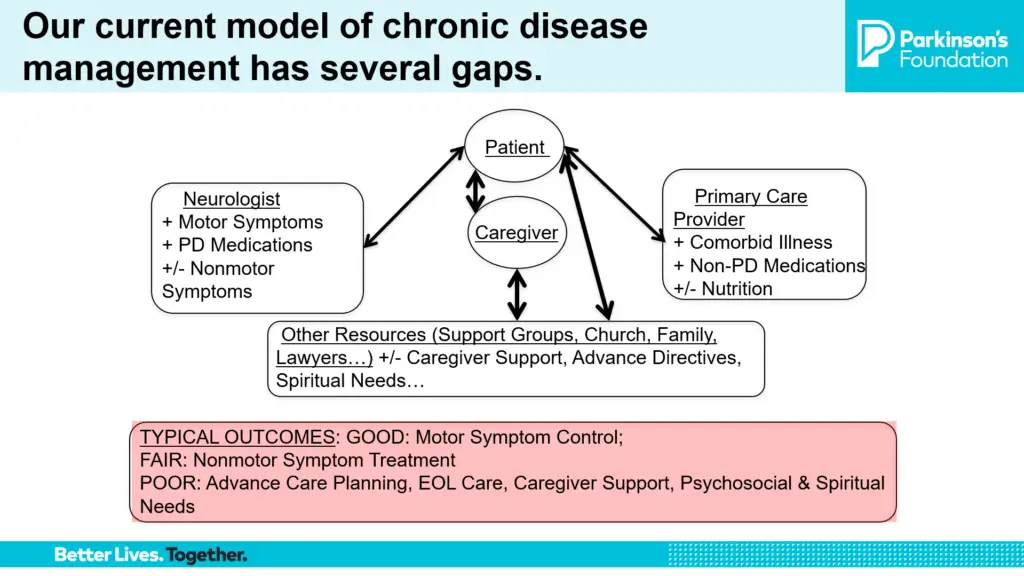
What was discovered is that the current model of chronic disease management has several gaps.
“We hypothesized that team-based palliative care would address these gaps,” said Professor Kluger, “And that’s what we found.”
Changing culture and challenging systems to improve care
Professor Kluger acknowledges that these shifts in culture and systems require significant efforts, which is why in 2020, the Parkinson’s Foundation launched a palliative care program across U.S. centres of excellence, in partner with the University of Rochester Medical Centre.
This is when ‘The 5 Pillars’ were introduced as an assessment standard for all palliative care patients:
- Advance care planning: A routine gift
- Care partner support: You have to see them to support them
- Hospice and specialist palliative care: Focus on the benefits
- Nonmotor symptoms: Be systematic
- Spiritual and emotional assessment: Don’t try to be religious or spiritual. Just talk about their life.
Benefits of a palliative approach for healthcare providers
Drawing on his own personal experience as a neurologist, Professor Kluger believes that the palliative care skillset can improve your effectiveness as a healthcare provider.
“I know for myself, that prior to doing neuro-palliative care, that I would leave on a Friday afternoon after feeling very hopeless and helpless in front of certain patients…but in my practice now, I do about 3-5 condolence cards per week. And that’s not because I’ve become one of the worst neurologists in the world,” he joked, “It’s because I’m seeing people right through to the end of life. I’m not abandoning them and I have things that I can offer them throughout the whole disease course.”
Professor Kluger said there’s a lot more that neurologists can do, “As I’ve worked with residents, fellows, and colleagues, I think people really feel empowered when they’re able to have these tough conversations with skill and compassion.”
Including joy and the positives in your approach
In a paper he wrote about ‘the total enjoyment of life’, Professor Kluger covered ways for healthcare providers to be more systematic and comprehensive for bringing joy to life.
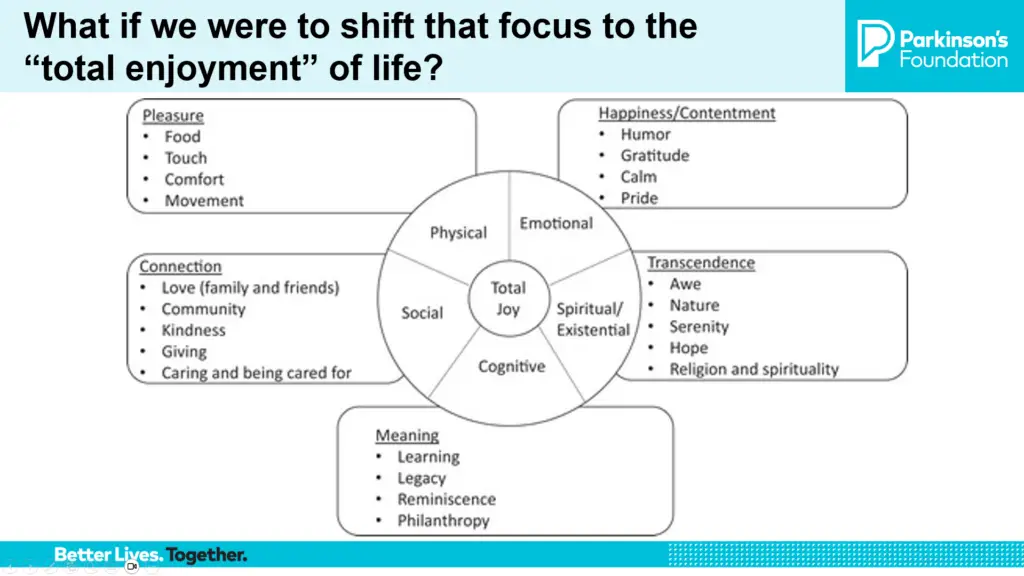
“It’s actually now a part of our assessment and plan in the neuro-palliative care clinic.”
Professor Kluger said that included a table for ‘sources of suffering’ and one for ‘opportunities for joy’, as was a way to explore how they can help people meet goals and their sources of joy.
“Even towards end-of-life, which can be something as simple as touch, eating more ice cream, or getting out to your favourite park—those are simple things, but they make a big difference.”
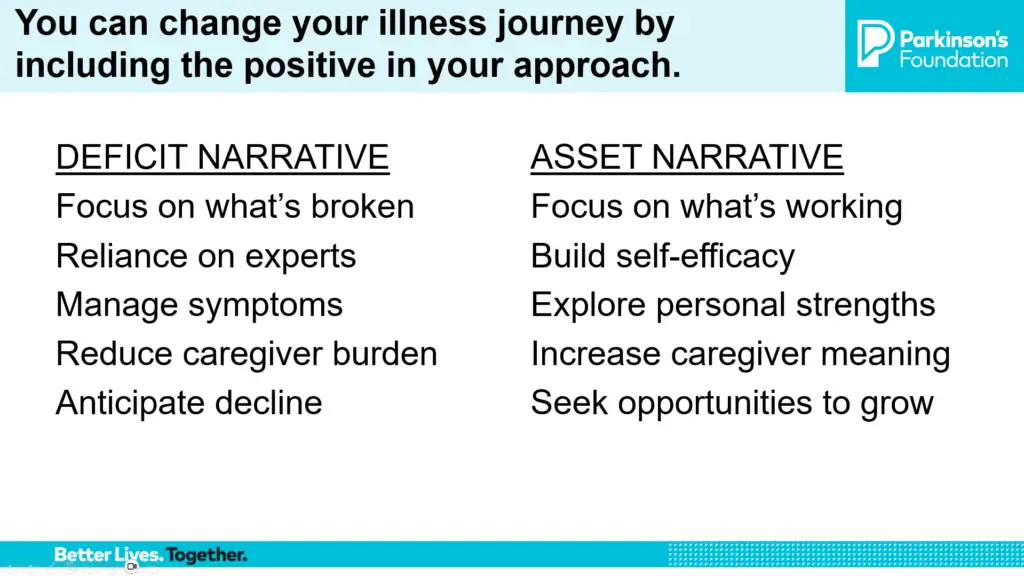
Finally, Professor Kluger touched on changing a patient’s illness journey by shifting away from the common ‘deficit narrative’ and towards an ‘asset narrative’.
“Increasingly, my group and I have been focusing on an asset narrative which has been transformative in terms of our relationship with patients, and them being able to live a good and meaningful life.”
Professor Kluger’s FULL presentation from the 2025 Parkinson’s Research Symposium can be viewed below: