Cheryl didn’t think she would have to care for her husband Llwyd in the way she cared for her children when they were young, but this is what she had to do when her husband was diagnosed with Progressive Supra-nuclear Palsy (PSP) at the age of 50. Cheryl recounts:
“We thought at first he was under stress through his job and after a rest everything would be okay. He was put into the Royal Melbourne Hospital where they ran tests for a couple of weeks. Then the meeting came. There were four doctors, Llwyd, myself and our two oldest children who were 18 and 20 at the time. Llwyd was diagnosed with PSP. We knew it was a form of Parkinson’s, but didn’t realise what this really meant until we did some research and started to talk to people.
“I cared for Llwyd for the next two years and he deteriorated fast. It seemed to eat him up; he couldn’t walk without an aid, couldn’t turn himself over in bed, or get out of the chair himself. I would spend many days by his bedside holding his hand and talking to him, letting him know what was happening in our children’s lives.
” He stayed positive throughout and taught us all that no matter how hard life is you never give up.”
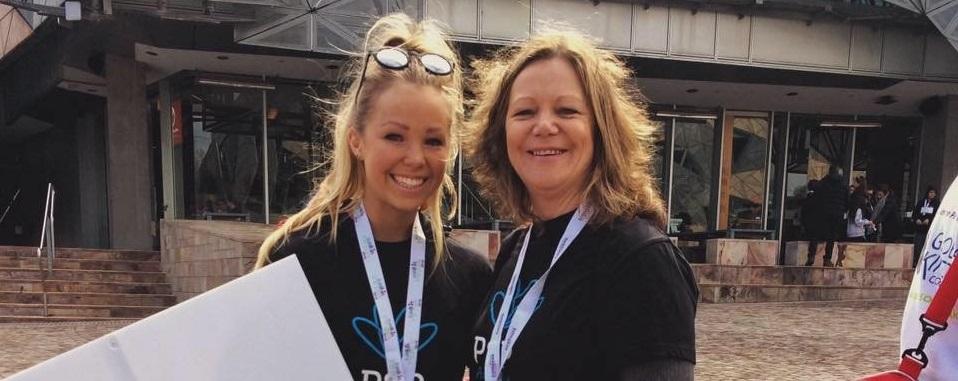
Llwyd passed away 5 years ago and each year her children, friends and Cheryl join A Walk in the Park to walk for Llwyd’s memory and as a way of supporting other people who are going through tough times.