About the World Parkinson Congress
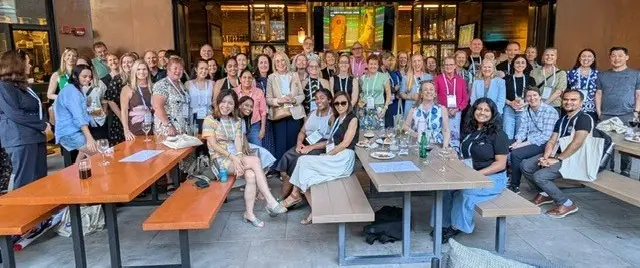
The World Parkinson Congress (WPC) is an international Parkinson’s conference that offers an abundance of opportunities to the international Parkinson’s community, which includes access to researchers, clinicians, neuroscientists, nutritionists, rehabilitation specialists, people with Parkinson’s, their carers, families, and others from around the world.
Every three years, the WPC takes place in a different destination, with a program that extends across 3 or 4 days and includes:
- An awards ceremony
- Educational courses and lectures
- Networking events and opportunities
- Panel and roundtable discussions.
Fight Parkinson’s involvement with the WPC
This year, Fight Parkinson’s was proud to have four members of the team attend and to be a Platinum Champion Partner of the World Parkinson Congress, in collaboration with Shake It Up Foundation.
From moderating talks, participating as guest panellists and audience members, to networking with global friends and counterparts, each member of the Fight Parkinson’s team who attended the Congress was honoured for the opportunity to:
- Confirm and strengthen their existing knowledge in each of their dedicated fields
- Collaborate on a global scale with the international Parkinson’s community
- Deepen their commitment to improving the lives of those affected by Parkinson’s, including friends, families, and healthcare teams.
Key learnings from the WPC
Sheenagh Bottrell – Fight Parkinson’s Board Member, Fight Parkinson’s Young@Park Peer Support Group Leader, and 2026 WPC Australian Ambassador
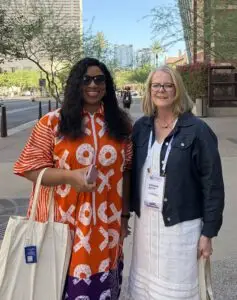
As the Australian Ambassador for the WPC, Sheenagh’s roles ranged from promoting the event and encouraging attendance across Australia, to supporting the World Congress stand in the exhibition hall and speaking in the Leader’s Support Group Lounge.
Sheenagh was also a guest panellist for a session called ‘Parkinson’s Fundamentals – The Basics’, where she shared her personal journey of living with Young Onset Parkinson’s for 15 years, including her diagnosis and the impact over time of her initial decision to delay starting medication..
Sheenagh also gained a lot from attending a range of creative, scientific, and wellness programs across the event.
Alongside meeting other inspiring people who live with Parkinson’s, Sheenagh’s key learning was that “While research continues to advance steadily, there are still no major breakthroughs, reinforcing the importance of ongoing hope, collaboration, and, above all, exercise with purpose and intensity.”
Paula Anastasoglou – Fight Parkinson’s occupational therapist

Although Paula has been an occupational therapist for 37 years, she reported that she still came away from the 2026 WPC with moments of resonation and opportunities for connection with other healthcare professionals from around the globe.
In addition to witnessing the Grand Canyon—one of the ‘Seven Natural Wonders of the World’—Paula attended over 10 sessions at the event, which included discussions on topics like Young Onset Parkinson’s, Parkinson’s treatments, diet tips, and more.
Of all the sessions she attended, Paula stated that ‘Building Healthy Lifestyles’ was the most valuable for the community, from her perspective.
“The session discussed the science behind making behavioural change, how to lead an active lifestyle and overcome common barriers to this, as well as how to sustain healthy eating habits. This information is something I draw on every day when talking with members of the Parkinson’s community—my aim is to empower individuals to do what they can to ‘live well with Parkinson’s’ and stay engaged in daily activities that are meaningful for them.”
Paula recounts two key learnings from the WPC, which confirmed and reinforced her existing knowledge as a healthcare professional who helps people with Parkinson’s to stay independent for longer and carry on doing the activities that are important in their lives:
- From Professor Bastian Bloem, a neurologist from the Netherlands—early multidisciplinary Allied Health intervention is crucial for people living with Parkinson’s, to introduce self-help strategies, i.e. person-centred care. This empowers individuals to take an active role in managing their Parkinson’s.
Using the analogy of ‘the sun of the universe’, Professor Bloem believes that all treatment or intervention should revolve around the person, i.e. their goals, needs, preferences, values, culture, etc, are always the most important considerations. - From Professor Daniel Corcos, a professor in Physical Therapy and Human Movement Sciences from USA—the importance of exercise.
According to Professor Corcos, the evidence is clear, overwhelming, and compelling. Exercise is not just good for helping to relieve Parkinson’s symptoms, it’s good for the whole person.
Victor McConvey – Fight Parkinson’s Director of Health Services
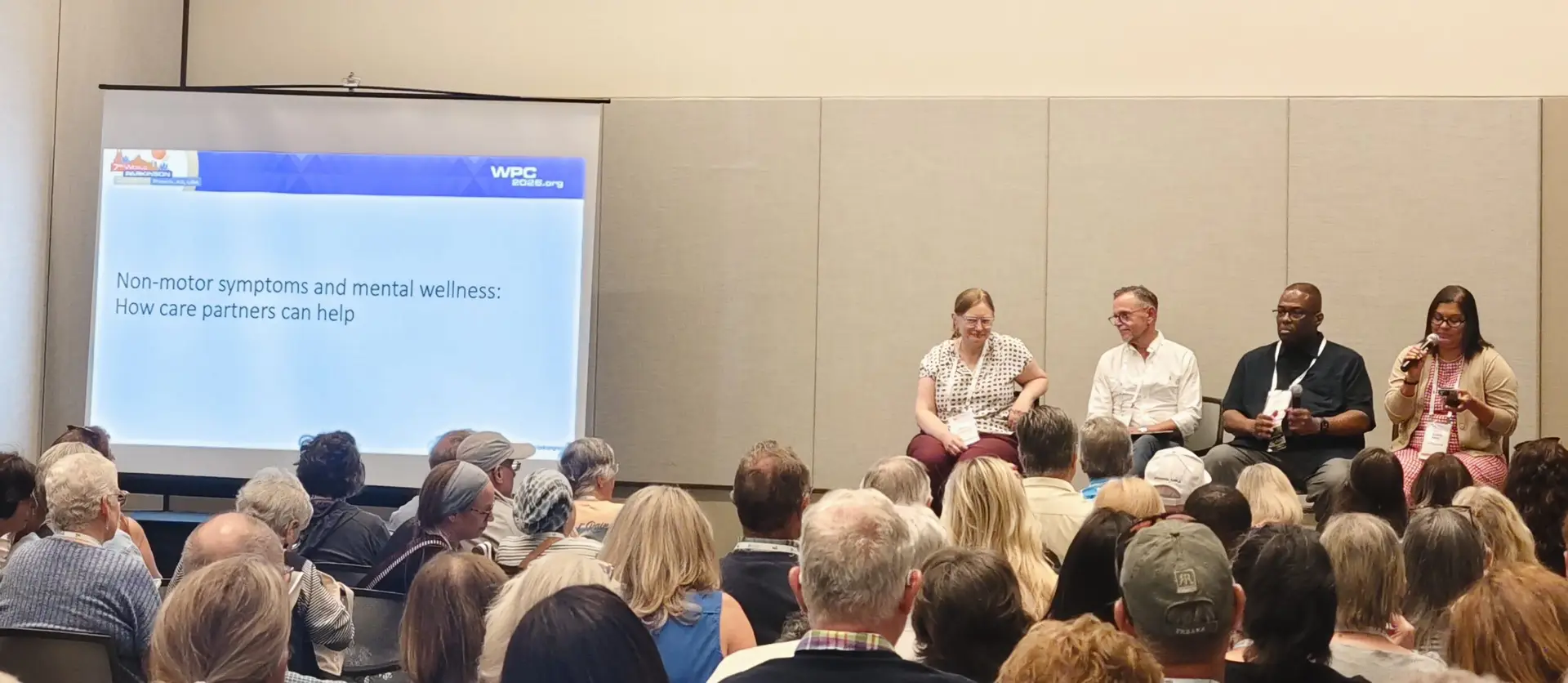
From co-chairing, to moderating panel discussions, and taking on MC responsibilities, Victor had a hand in not only supporting sessions, he also helped to pull the event agenda together.
“What makes the WPC unique and important is that it is designed and attended by people living with Parkinson’s, their families, healthcare professionals, researchers, scientists, physicians, and neurologists,” said Victor.
Designed specifically for people living with Young Onset Parkinson’s, the Pre-Congress Program focusing on Parkinson’s fundamentals, called ‘Diagnosis, Management, and Genetic Considerations in Young Onset Parkinson’s’ was moderated and developed by Victor in collaboration with Omotola Thomas—who is living with Young Onset Parkinson’s and heads up Parkinson’s Africa.
Victor was also the moderator for a Scientific Session, called ‘Device Assisted Therapies: Optimising Outcomes for Successful Integration into Everyday Life’. This session included Fight Parkinson’s Research Committee Member, Mark McAughley, who lives with Young Onset Parkinson’s.

Over in the Family and Care Partner Classroom, Victor sat on a multidisciplinary panel for another Scientific Program, called ‘Managing Symptoms’. Focusing on non-motor symptoms, this program was delivered to over 300 people and included a psychologist living with Young Onset Parkinson’s—Becca Miller.
The Movement Disorder Societies Study Group, of which Victor is a co-chair, gave a Clinical Sciences Poster Presentation on ‘Progression and Prognosis of Young Onset Parkinson’s: Challenges and Suggestions’. Additionally, Victor also took initiative at the Allied Health Professional Networking Evening Function and presented the models of Movement Disorder Nursing in Australia in the nurse breakout.
The key learning that Victor took away from the WPC, was “hope.” Reflecting on his experience, he said, “This meeting was able to present some very complex research, which indicated that we are continuing to learn more about Parkinson’s and better understand why there are so many different ways it presents. This knowledge will enable us to identify environmental concerns, which may cause Parkinson’s and eliminate them and to personalise the treatment response to your particular symptoms and presentation.”
Emma Collin – Fight Parkinson’s Chief Executive Officer
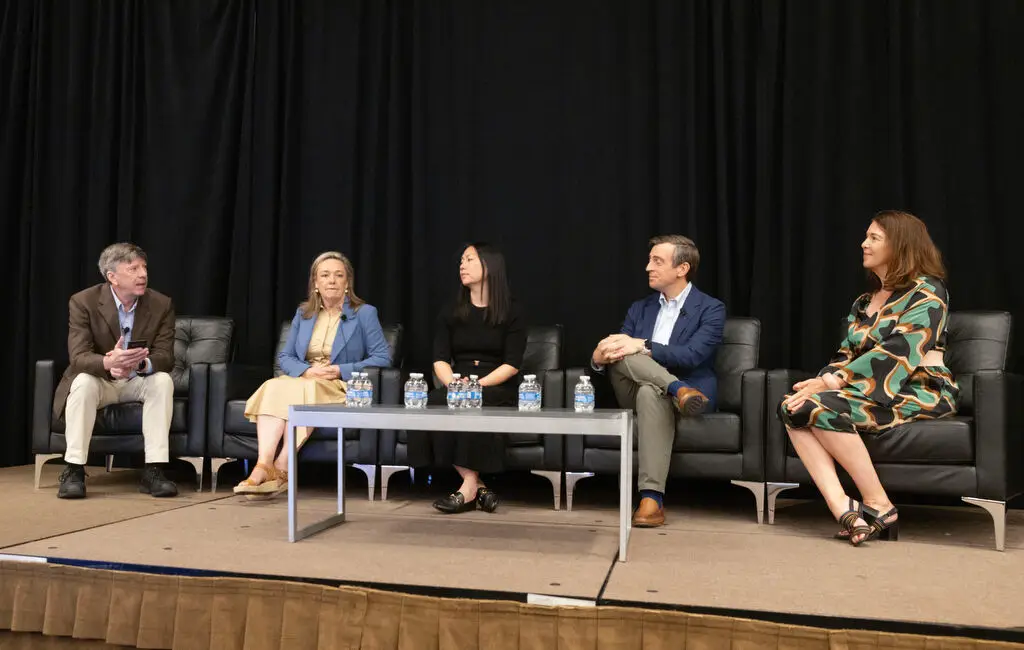
Fight Parkinson’s CEO, Emma was pleased to attend the WPC as an Australian representative in numerous sessions and meetings.
Alongside our National Parkinson’s Alliance Members—Shake It Up Foundation, and Parkinson’s NSW, Emma contributed to a session called ‘The Power of Collaboration – A case study of Australia’s first National Parkinson’s Action Plan’ (NPAP), where she presented on the NPAP, which launched in Canberra earlier this year.
She was also a panellist at the Leadership Forum and the Global Policy Forum, plus Emma found many moments to connect with international friends. This included members of the ParkinsonNet global team network from countries including France, Norway, and Poland—who are currently, or have already, implemented
ParkinsonNet into their own healthcare systems. As well as influential authors like Steve Yellen, who recently published a book titled ‘Living Parkinson’s’.
For Emma, her key learning from the WPC was the shared commonalities between organisations and governments around the world.
“This year in Phoenix, Arizona, our team had the privilege of presenting, collaborating, and learning alongside the world’s leading researchers, clinicians, advocates, and people living with Parkinson’s. What strikes me every time is how much we have in common—the same challenges, the same gaps, and the same ambition. Australia is contributing to that global conversation in a meaningful way, and we are bringing that knowledge, those relationships, and those opportunities home. The world is paying attention to what our community is building. That should give all of us confidence and inspire us to keep going.”
From focusing on person-centred care, to the intrinsic idea of maintaining hope, and recognising that we are not alone in our struggles or our perseverance, Fight Parkinson’s came away from the World Parkinson Congress with an appreciation for the global Parkinson’s community and a fervent motivation to continue our mission.
Together, we will continue to empower those living with Parkinson’s to lead fulfilling lives, advance advocacy efforts, and drive research toward effective treatments, care, and prevention.