
Speech Pathology Week 2026: Unmasking hypomimia

This Speech Pathology Week, Fight Parkinson’s unmasks the truth behind hypomimia and highlights the important role of speech pathologists in helping people with Parkinson’s to manage hypomimia and other communication-related symptoms. What is hypomimia? Hypomimia is a loss or reduction of facial expressiveness, including emotional expressions. It is a common symptom of Parkinson’s and is […]
Fact sheet: Mobility

This mobility fact sheet highlights the different motor and non-motor symptoms that can impact movement, how to live with and manage symptoms, and the healthcare professionals who can help you manage aspects of your mobility. You’ll learn about: The definitions of certain motor and non-motor symptoms that can affect mobility The importance of good medication […]
Self-Care Day 2026: Your health in your hands

This National Self-Care Day, Fight Parkinson’s explores the key areas of self-care and offers tips on how to implement small changes in your everyday life to care for yourself. What is self-care? According to the World Health Organisation (WHO), ‘self-care’ is defined as “the ability of individuals, families, and communities to promote health, prevent disease, […]
Parky Soccer: A social group rewriting the rules
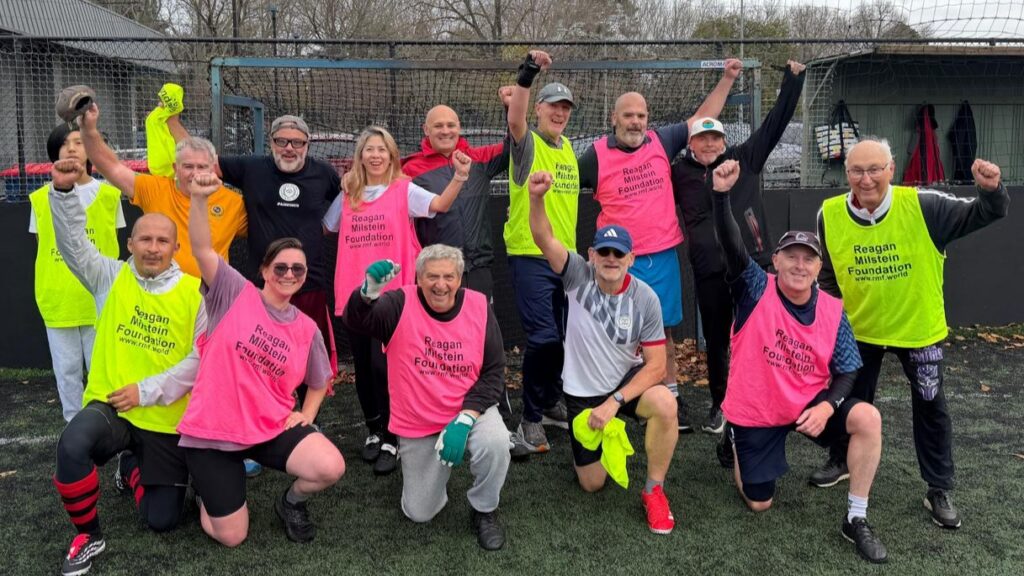
Continued support through Fight Parkinson’s After receiving his diagnosis of Young-Onset Parkinson’s in 2010, Mark recalled attending an in-person ‘Recently Diagnosed Seminar’ held by Fight Parkinson’s—then known as Parkinson’s Victoria. Since this first interaction, Mark said that he and his wife have contacted Fight Parkinson’s on multiple occasions, for different reasons, but has always found […]
World Music Day 2026: Tune in to ParkinSong

Though not every person with Parkinson’s will experience speech and non-verbal communications difficulties, a large number of people do develop problems—from reduced volume of speech, difficulty articulating words, to a monotonous tone, reduced facial expressions, and more. In recognition of World Music Day, Fight Parkinson’s invites and encourages the community to join your local ParkinSong™ […]
PSP Awareness Month 2026: Spotting the red flags
There are no blood tests that can diagnose PSP, although brain scans may reveal a Hummingbird sign in some people with PSP. Generally, tests and scans will be used to rule-out other conditions. It is common for people with early symptoms of PSP to be misdiagnosed with Parkinson’s due to similar symptoms, such as slowness […]
Managing Symptoms: Tips and tricks for enjoying the social season

Fatigue is a common symptom for people living with Parkinson’s, and when we are adding more outings and get togethers across the Christmas and New Year period to our schedule, fatigue can feel overwhelming. While fatigue and sleepiness are often used interchangeably in conversation, they are different symptoms. Fatigue is persistent feeling of exhaustion irrespective of […]
Research call-out: Apathy and Motivation in Parkinson’s

Parkinson’s apathy study Parkinson’s apathy study Parkinson’s disease is usually considered a disorder of movement, but many patients also suffer from problems with thinking and motivation. At the Turner Institute for Brain and Mental Health at Monash University, they will conduct research into the difficulties with cognition and motivation commonly faced by individuals with Parkinson’s. […]
Falls prevention and Parkinson’s

The lack of dopamine levels in the brain means people can have difficulties in controlling their movements and moving freely. Movement slows, muscles stiffen, and posture can change. These changes can lead to challenges with walking, increasing the risk of falling and freezing. Walking (Gait) Gait is used to describe how a person walks and […]
Singing, Parkinson’s, and you

One of the most common symptoms experienced by people living with Parkinson’s is changes to their voice and communication. While not everyone experiences these issues, many do. The stage when these problems might occur is different for everyone and the symptoms will vary from person to person but may include: Reduced volume of speech Slurred […]